Florence has been a leather city for centuries, and the streets around San Lorenzo and the Mercato Centrale are full of jackets, bags and wallets. Most of it is the real thing, but imitations and low-grade "bonded" leather are around too. These seven checks take a minute and work in any shop, including ours.
1. Smell it
Genuine leather has a warm, rich, slightly earthy smell. Synthetic "PU leather" or "pleather" smells of plastic or chemicals, or of nothing at all.
2. Look at the edges
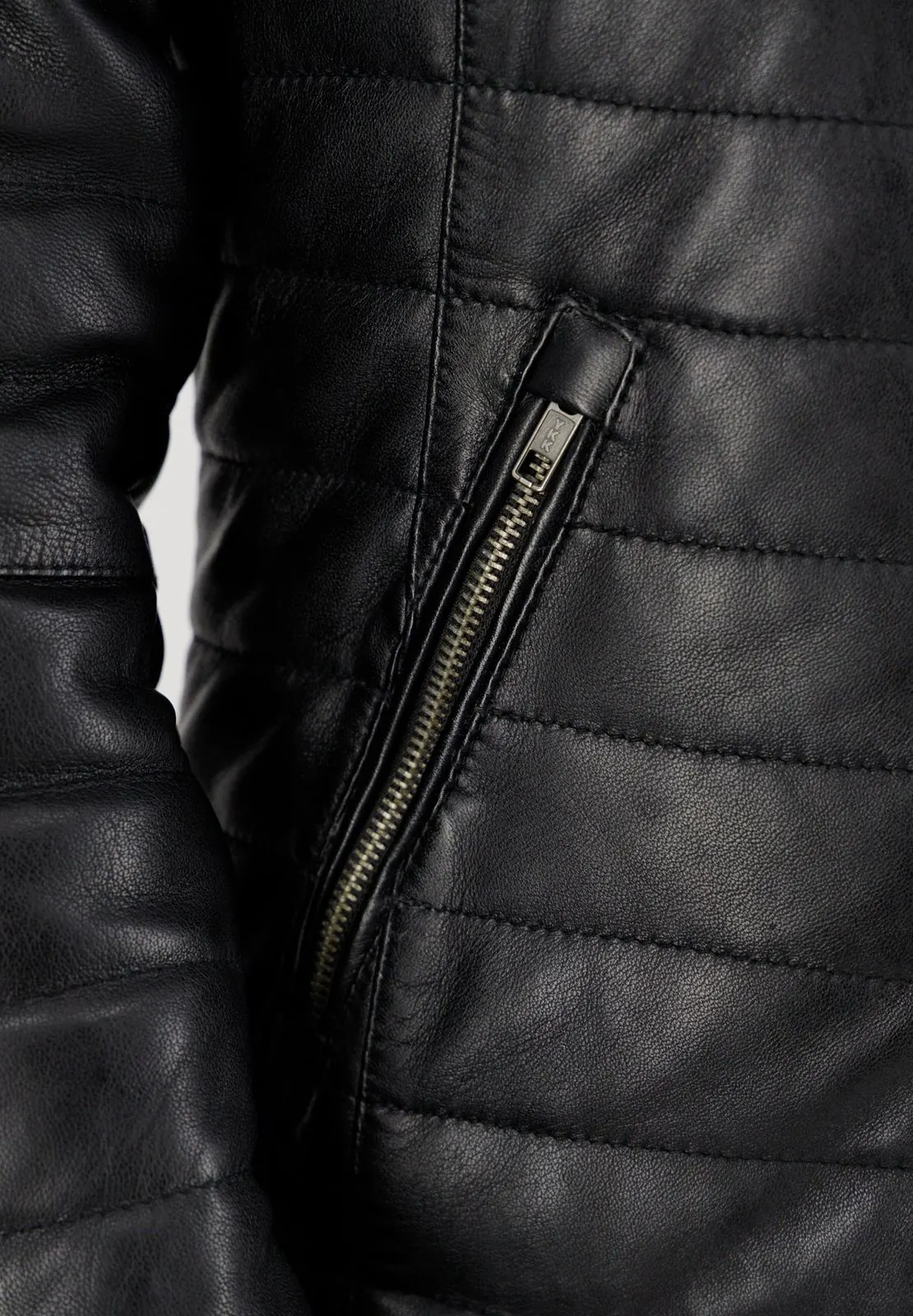
This is the most reliable quick check. On a cut edge (a strap, a belt end, inside a pocket), real leather shows a dense, fibrous, slightly suede-like cross-section, or a smooth edge that has been painted or burnished. Imitation leather usually shows a thin plastic film on top of a woven fabric backing.
3. Check the grain
Natural leather has small irregularities: pores, tiny creases and slight variations in colour. A perfectly repeating pattern across the whole piece usually means an embossed synthetic surface.
4. Press and fold it
Press your thumb into the leather or gently fold it. Real leather wrinkles softly and recovers, sometimes with a slight change in tone. Synthetics tend to pucker stiffly and spring back like plastic.
5. Feel it warm up
Leather is a natural material that warms to your hand within seconds and feels supple. Plastic stays cool and can feel slightly sticky.
6. Read the label carefully
Vera pelle means "real leather" in Italian. "Made in Italy" refers to where the item was made, so if that matters to you, ask the seller. Be careful with vague terms like "leather look" or "eco-leather" (ecopelle), which in everyday use usually means synthetic.
7. Ask questions
A good shop will happily tell you which leather a piece is made from, how it was finished and how to care for it. If a seller can't answer basic questions, keep walking.
Common leathers at a glance
| Leather | Feels like | Best for |
|---|---|---|
| Lambskin (nappa) | Very soft, light, buttery | Jackets, gloves |
| Calfskin | Fine, smooth grain, durable | Wallets, bags, belts |
| Cowhide | Thick, sturdy, ages well | Bags, belts, travel goods |
| Goatskin | Pebbled texture, tough yet light | Bags, gloves, jackets |
| Suede | Brushed, velvety (the inner side) | Jackets, bags, shoes |
Two more tips for travellers
Tax-free shopping: visitors who live outside the EU can usually reclaim part of the Italian VAT on purchases of €70 or more in one shop on the same day. Ask for a tax-free form when you pay and bring your passport.
Price as a signal: a full leather jacket takes a lot of hide and labour. If the price seems too good to be true, use the checks above before you buy.
See it, touch it, try it on
Pelletteria La Noce · Borgo la Noce 8/R, 50123 Florence. One minute from the Mercato Centrale and the Medici Chapels, five from the Duomo.